

PERSONAL PROTECTION APPLICATION
Personal Mobile Protection
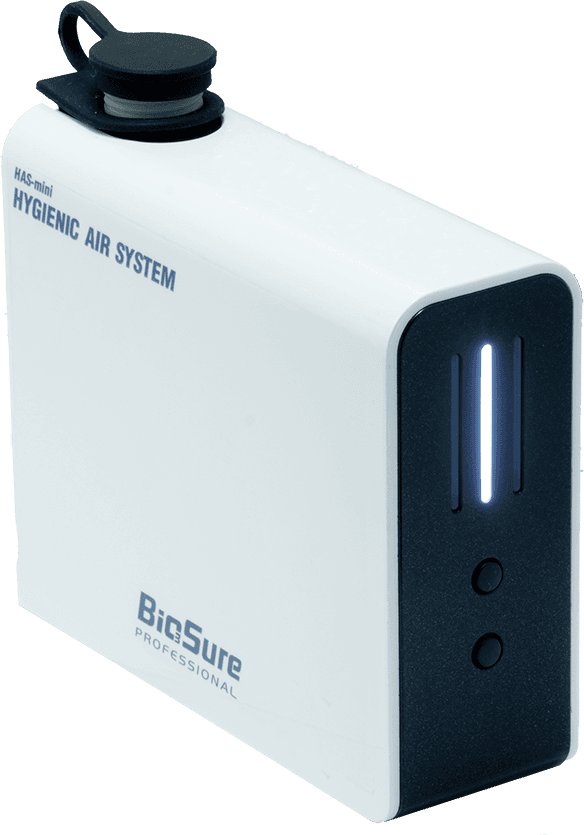
Powered by HAS Mini
Portable localized air hygiene for personal spaces, meetings, vehicles and temporary occupied environments using humidified ozone and Reactive Oxygen Species (ROS).
Localized air hygiene Portable power Personal-zone engineering
Protect the occupied zone, not an entire room instantly
Personal protection uses controlled localized treatment around occupants and compact environments. The engineering objective is a sustained hygienic zone positioned where people spend time.
Office MeetingPassenger VehicleAmbulanceHotel RoomRefrigerated StorageBakery ShowcaseExamination Room
From pure water to a localized protection zone
HAS Mini converts pure water through electrolytic ozone generation, transports it as humidified nano mist, and sustains ozone plus ROS activity within the local occupied zone.
01Pure Water
02Electrolytic Ozone Generation
03Humidified Nano Mist
04Ozone + ROS
05Localized Protection Zone
Humidified ozone prolongs oxidant activity and continuously generates ROS while droplets remain suspended.
A soft protection envelope around the user
The discharge is represented as a diffused three-dimensional envelope, not a concentrated beam. Treatment intensity reduces progressively with distance.

Distance values are planning references. Actual performance varies with airflow, humidity, placement and operating mode.
Moisture-supported oxidant transport
HAS Mini uses humidified ozone rather than dry ozone. The established nano-mist engineering visual illustrates how moisture supports transport and controlled exposure.
- Supports oxidant persistence
- Promotes ROS formation
- Creates a localized oxidant reservoir
- Supports sustained treatment within the control zone
Performance depends on humidity, airflow, distance, room geometry and the selected operating mode.
Reactive Oxygen Species continue the oxidation pathway
ROS continue oxidation after ozone begins decomposing. The established ROS engineering visual is reused here to explain generation, transport, reaction and decay.
O₃OH•HO₂•H₂O₂¹O₂
Ambient moisture changes oxidant persistence
The established HAS Mini engineering basis treats humidity as a transport and persistence variable rather than a standalone performance claim.
Higher moisture availability supports longer ozone and ROS persistence.
Normal conditioned-room humidity supports balanced localized operation.
Low humidity can shorten the persistence of the humidified ROS field.
USB-C power for mobile deployment
HAS Mini can operate from a compatible power bank for meetings, travel and temporary installations.
Carry BagPower BankPortable OfficeTravelMeeting
POWER-BANK RUNTIMEPortable operating reference
| 5,000 mAh | ~6 hours |
|---|---|
| 10,000 mAh | ~12 hours |
| 20,000 mAh | ~24 hours |
One compact platform, multiple personal environments
Each scene keeps the official HAS Mini as a separate, undistorted product layer while showing localized aerosol and ROS distribution in context.

Office Meeting
Localized humidified-ozone and ROS support for small meetings and shared workspaces.
Passenger Vehicle / Car Cabin
Portable localized air-hygiene support for personal travel and occupied vehicle cabins.

Ambulance / Emergency Vehicle
Compact operation in personal and service vehicles.

Hotel Room
Portable localized air-hygiene support during temporary accommodation.

Refrigerated Food Storage
Odor and microbial-control support for enclosed fresh-food storage.

Bakery Showcase
Local treatment support for enclosed food-display volumes.
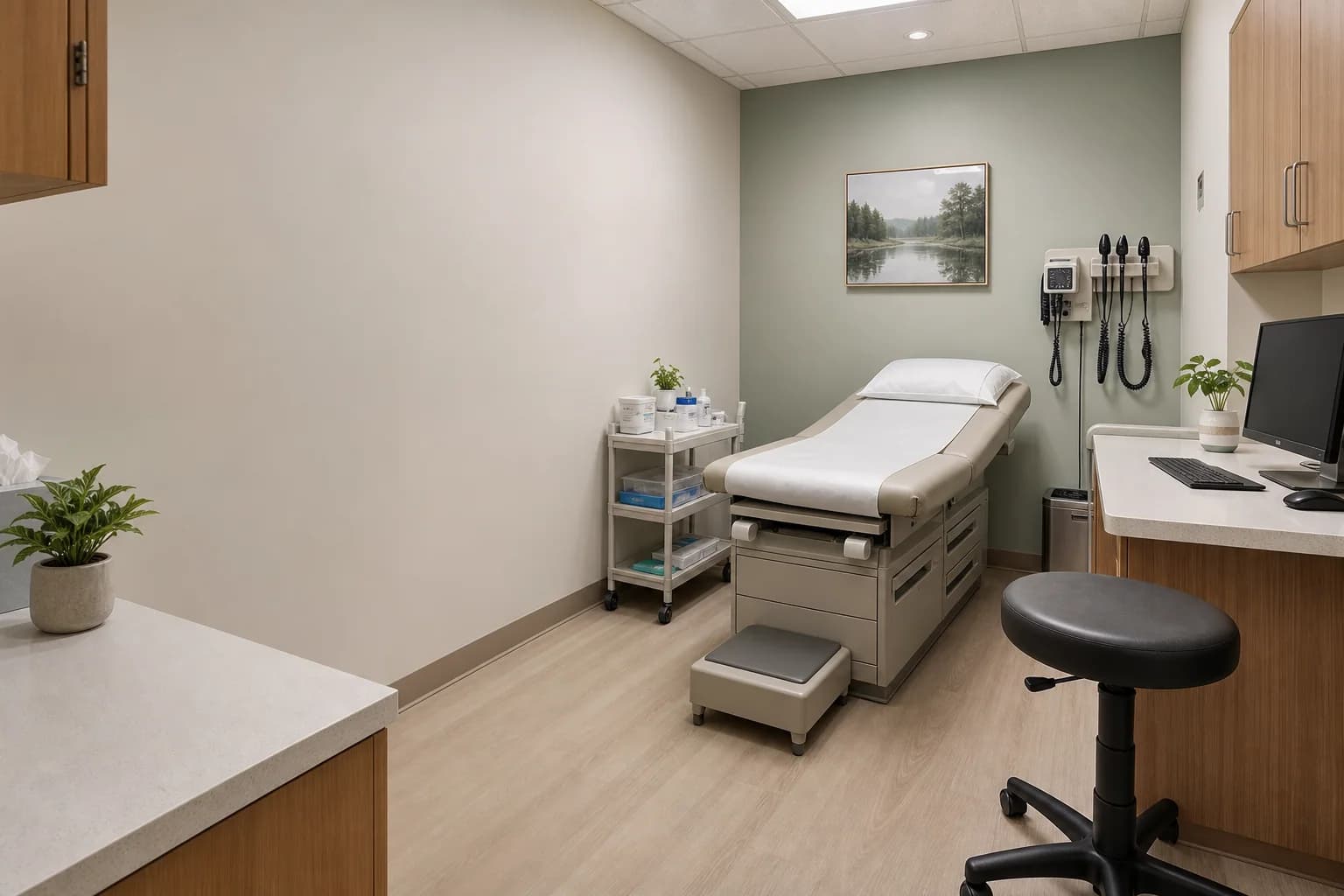
Small Examination Room
Localized air-hygiene support for compact consultation and examination spaces.
Separate whole-room estimates from near-field measurements
HAS Mini is modeled as a passive local source with no internal fan. Whole-room values use a transparent well-mixed mass balance; distance-specific values remain measurement-driven.
Visible calculation basis
C_ss = (G × Duty × releaseFraction) / (ACH × V + k × V)ppm = C_ss(mg/m³) × 24.45 / 48Estimated Whole-Room Ozone Concentration vs Time
Mode 1 · Continuous operation · engineering estimate
Decay input required
The concentration-over-time profile appears when room geometry, ACH, release fraction and ozone decay inputs are complete.
Distribution depends on ambient room airflow. The 2 mm opening does not define a forced-air flow rate.
Geometry information only; the area is not used in the whole-room concentration formula.
Runtime is not inferred because an approved water-consumption rate is not available here.
DIRECT-COLLECTION TEST EVIDENCE
Secondary bench-test evidence
Calculated under documented collection assumptions≈13.2 ppm
Measured in documented direct-collection setup≈13 ppm
Supporting portable surface protection
COS and OSB complement the application but retain their own Product pages as the source of detailed engineering information.
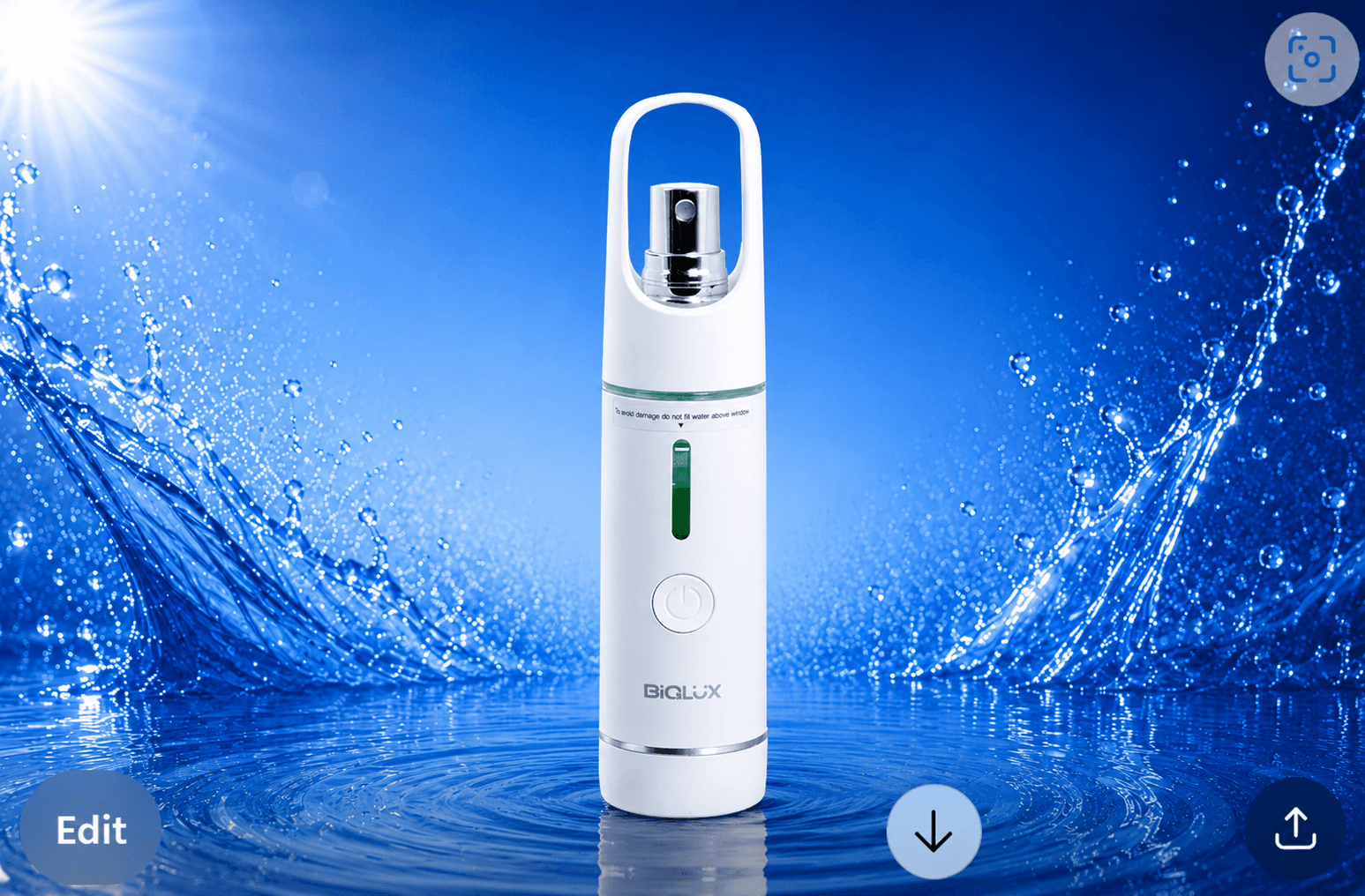
COS
Portable personal surface sanitization for frequently touched objects.
View Product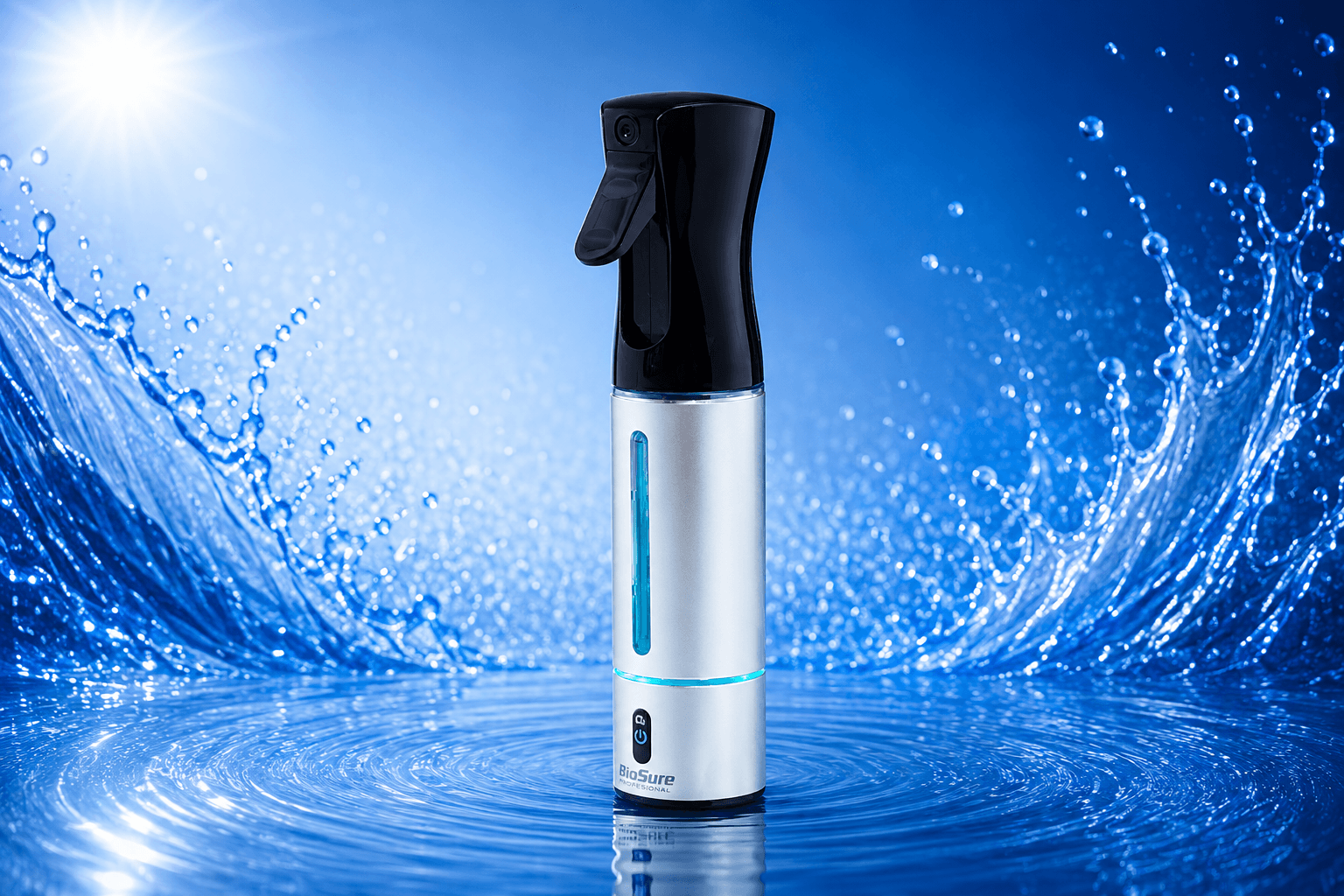
OSB
Portable aqueous ozone spray for controlled surface disinfection.
View Product